
The Missing Link Behind Chronic Back Pain
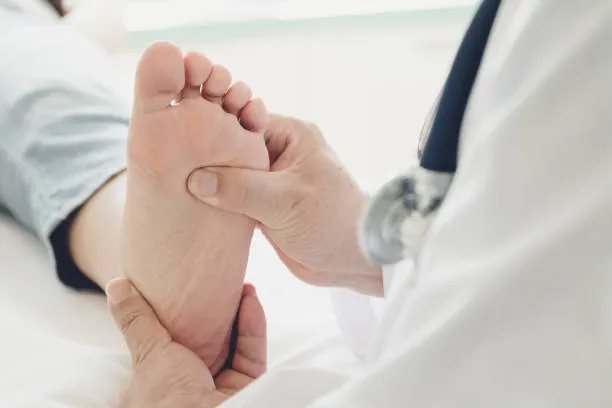
Most people assume that if their low back hurts, the problem must be in their back.
That seems logical.
But after evaluating thousands of patients, we’ve learned something surprising:
Pain and the source of pain are often two completely different things.
Your back may be hurting because it’s compensating for something happening much farther down the body.
Sometimes…
it’s your hips.
Sometimes…
it’s your core.
Sometimes…
it’s your ankles.
And very often…
it’s your feet.
At Premier Chiropractic Clinic, one of the biggest differences in how we evaluate patients is that we don’t simply chase pain—we evaluate how the entire body moves together.
Because your body isn’t built in isolated pieces.
It’s one connected system.
The Body Works as One Kinetic Chain
Take a moment to think about something simple:
Walking.
When you take a step, your body doesn’t isolate one joint at a time.
It uses an entire chain:
- your feet contact the ground
- your ankles flex
- your knees bend
- your hips move
- your pelvis rotates
- your spine twists slightly
- your shoulders counterbalance
- your core stabilizes
This is called the kinetic chain.
It’s why an issue at the foundation — your feet — can create changes all the way up to your low back.
At Premier Chiropractic Clinic, we evaluate the entire kinetic chain. If one link isn’t moving well, another link tries to do its job.
We use our in office Foot Levelers scanner and treatment with custom made orthotics when appropriate to help support or improve core, back, hip and foot stability.
Your Feet Absorb Thousands of Pounds of Force Every Day
Let’s put this into perspective:
- you take 5,000-10,000 steps per day
- if you weigh 150 pounds, every step loads approximately 150 pounds of force through your foot.
- that’s roughly 750,000-1,500,000 pounds of force passing through your feet EVERY SINGLE DAY.
- or 270,000 tons, every year.
Your feet absorb that force — they don’t magically disappear.
Every single step places several times your body weight through the foot before that force travels up through the ankles, knees, hips, pelvis and spine.
If your foot mechanics aren’t working efficiently…
your knees absorb more stress.
Your hips work harder.
Your pelvis rotates differently.
Your lumbar spine begins compensating.
Eventually your back can start complaining.
Small Foot Problems Become Big Back Problems
One of the biggest misconceptions about foot mechanics is that problems have to be painful.
They don’t.
Many people have:
- slightly collapsed arches (you have 3 in your feet)
- stiff ankles
- poor toe mobility
- limited big toe extension
- weak foot muscles
without ever experiencing foot pain.
Instead…
their back hurts.
Or their hip.
Or their knee.
The body is remarkably good at compensating.
Until it isn’t. Until the proverbial straw breaks the camel’s back and pain start manifesting.
Why We Always Look Beyond the Area That Hurts
A patient may schedule because of low back pain.
They expect us to look only at their back.
Instead, we often evaluate:
- posture
- walking mechanics
- ankle mobility
- hip mobility
- pelvic movement
- foot stability
- spinal motion
- balance
- muscle coordination
Why?
Because your nervous system doesn’t organize movement by body parts.
It organizes movement by patterns.
If your foot isn’t absorbing force correctly…
something else has to.
Usually your back volunteers.
Flat Feet Aren’t the Only Problem
People often assume custom orthotics are only for flat feet.
That’s far from true.
We evaluate many different movement patterns including:
Excessive pronation
The arch collapses too much during walking.
This allows the tibia to rotate excessively, often creating stress up the chain.
Excessive supination
The foot stays rigid and doesn’t absorb impact efficiently.
Instead of acting like a shock absorber, force transfers upward into the knees, hips and spine.
Limited ankle mobility
If the ankle can’t move well, the body finds motion elsewhere.
Often:
- the knee
- the hip
- the lumbar spine
Poor balance
The foot contains thousands of sensory receptors that constantly communicate with the brain.
When those signals become less efficient, balance, coordination and stability can all suffer.
Why We Evaluate the Entire Foot—Not Just the Arch
The foot contains:
- 26 bones
- 33 joints
- over 100 muscles, tendons and ligaments
THAT’S 25% of ALL the bone in your body in your 2 feet.
It’s one of the most mechanically complex structures in the human body.
Its job isn’t simply to support you.
Its job is to:
- adapt to uneven terrain
- absorb shock
- create propulsion
- provide balance
- communicate with your nervous system
When any of these jobs become less efficient the rest of the body can pay the price.
Why We Adjust Feet and Ankles
Many people are surprised when they learn chiropractors don’t just adjust the spine.
At Premier Chiropractic Clinic, we routinely evaluate and adjust:
- feet
- ankles
- knees
- hips
- wrists
- elbows
- shoulders
- ribs
- jaw (TMJ)
Movement matters.
Every joint is designed to move.
When joints become restricted, surrounding muscles often tighten to protect the area.
Restoring healthy motion can help improve mechanics throughout the entire kinetic chain, even a big toe joint restriction can contribute.
Why Your Big Toe Matters More Than You Think
One of the most overlooked joints in the body is the big toe.
During walking and running, your big toe should extend as you push off the ground.
If it doesn’t, your body finds another way forward.
That often means:
- rotating through the foot
- twisting through the knee
- changing hip mechanics
- increasing lumbar rotation
Again, the back ends up doing extra work because the foot couldn’t.
But sometimes the foot needs a bit extra support.
Why Standing and Walking Matter During Orthotic Evaluation
One reason we partnered with Foot Levelers is because their philosophy closely matches how we evaluate movement.
Traditional hard orthotics are often made using a cast taken while you’re seated, the position that your foot is in while seated isn’t how the foot is positioned while moving.
Walking is dynamic.
Running is dynamic.
Golf is dynamic.
Standing is dynamic.
Your foot behaves very differently when bearing weight than when it’s suspended in the air or seated.
That’s why our Foot Levelers scan is performed while you’re standing.
This gives us valuable information about how your foot functions under load, the position that matters most during everyday life.
Rather than simply preventing motion, Foot Levelers custom orthotics are designed to support healthy movement while still allowing your foot to function naturally.
The goal isn’t to make your foot rigid.
The goal is to help it move more efficiently AND support the 3 arches of the foot whereas most over the counter orthotics only support 2 of the 3 arches.
Could Orthotics Help Your Low Back?
Not everyone needs orthotics.
But they can be an excellent tool for the right person.
We commonly recommend a scan for patients dealing with:
- recurring low back pain
- plantar fasciitis
- heel pain
- knee pain
- hip pain
- SI joint pain
- uneven wear on shoes
- prolonged standing at work
- running injuries
- frequent walking at work
- balance concerns
Our goal isn’t to simply sell orthotics.
Our goal is to determine whether improving your foundation could reduce the stress placed on everything above it.
Foot Pain Isn’t Required
Here’s something that surprises many patients:
You can have dysfunctional foot mechanics without any foot pain at all.
Instead, you may experience:
- recurring back pain
- hip tightness
- IT band irritation
- knee discomfort
- shin splints
- Achilles irritation
The feet quietly influence the entire body. They’re often overlooked simply because they aren’t the area that hurts even though they are the very foundation upon which you stand.
A Comprehensive Treatment Plan Goes Beyond Orthotics
If we determine your feet are contributing to your symptoms, treatment may include:
- chiropractic adjustments to the feet, ankles, pelvis and spine
- soft tissue therapy
- stretching specific muscle groups
- strengthening weak muscles
- gait recommendations
- footwear advice
- custom Foot Levelers orthotics when appropriate
- balance exercises
- home mobility drills
- personalized supplement recommendations to support tissue recovery when indicated
No two patients receive the exact same plan.
Because no two movement patterns are exactly alike.
The Goal Isn’t Just Less Pain
Pain relief is important.
But it’s only one piece of the puzzle. So even when pain is going, you may still need some support.
Our larger goal is helping your body move more efficiently.
When movement improves…
patients often notice they can:
- walk farther
- stand longer
- recover faster
- exercise more comfortably
- play with their kids
- enjoy hobbies again
- stay active as they age
That’s why we focus on function first. Pain often follows.
Frequently Asked Questions
Can flat feet cause low back pain?
They can contribute. Flat feet may change how force travels through the ankles, knees, hips and pelvis, placing additional stress on the lumbar spine. Not everyone with flat feet develops back pain, but in some people it can be an important piece of the puzzle.
Should everyone wear custom orthotics?
No. Some people have excellent foot mechanics and don’t need them. Others may benefit significantly. The key is evaluating your movement rather than making assumptions based on appearance alone.
Do chiropractors adjust feet?
Absolutely. Chiropractors receive training in joint mechanics throughout the body. At Premier Chiropractic Clinic, we frequently assess and adjust the feet and ankles when they are contributing to a patient’s symptoms or movement patterns.
Are custom orthotics only for foot pain?
Not at all. They may be recommended for recurring issues involving the feet, knees, hips, pelvis or low back when foot mechanics are playing a role.
How long does a Foot Levelers scan take?
Only a few minutes. The scan is quick, painless and performed right in our office while you’re standing.
The Bottom Line
Your low back doesn’t work alone.
Every step you take begins at your feet.
If your foundation isn’t functioning efficiently, your body adapts and those adaptations often show up as pain somewhere else.
That’s why we take a whole-body approach at Premier Chiropractic Clinic. We don’t just ask where it hurts. We ask why it hurts.
By evaluating the entire kinetic chain, from your feet to your spine, we’re able to identify contributing factors that are often overlooked and create a personalized plan designed to help you move better, feel better and stay active for years to come.
Related:
- Why Does My Back Hurt? Understanding the Root Cause of Back Pain
- Sciatica vs. Lumbar Radiculopathy: Understanding Leg Pain, Nerve Pain & When to Seek Treatment
- Back on Trac Spinal Decompression: Is It Right for You? (Coming Soon)
- Heat or Ice? Which One Is Better for Pain? (Coming Soon)

Ready to Find the Real Cause of Your Back Pain?
If you’ve been treating your back but still aren’t getting lasting results, it may be time to look at your foundation.
At Premier Chiropractic Clinic, we combine comprehensive movement assessments, chiropractic care, extremity adjusting, Foot Levelers custom orthotics, rehabilitation exercises and personalized treatment plans to address the source of the problem—not just the symptoms.
Call Premier Chiropractic Clinic today or schedule your evaluation online and discover whether your feet are the missing link in your recovery.